Hacked by CoupDeGrace
Greetz:
Hmei7, BrokenPipe, SimSimi, L4663r666h05t, AntonKil, d3b~x, Index Php, Mdn_Newbie, Sultan Haikal, Brian Kamikaze
Cloisonné painting is derived from the traditional Chinese craft of Jingtailan.
Jingtailan, officially known as “copper-body cloisonné,” was introduced to China from West Asia during the Yuan Dynasty and flourished during the Jingtai period of the Ming Dynasty (1450–1456). Because blue enamel was predominantly used at the time, later generations named it “Jingtai Blue.”
The production process of traditional Jingtailan is complex:
The entire process requires multiple firings, with precise control over temperature and timing. Due to its high difficulty and cost, Jingtailan was long reserved for imperial use and rarely seen among the common people.
The emergence of cloisonné painting changed this.
In the late 20th century, artisans attempted to “flatten” the Jingtailan process—removing the three-dimensional copper body and high-temperature firing while retaining the core steps of “wire inlaying” and “enamel filling”:
No more kilns, no more worry about cracking. With the simplified process, this craft moved from the imperial court to the people, from objects to paintings.
Today, cloisonné painting has become an independent craft category.
It preserves the linear beauty and color richness of traditional Jingtailan while lowering the barrier to entry, allowing more people to try it with their own hands.
From its introduction in the Yuan Dynasty, to its peak in the Ming, to its modern transformation.
Cloisonné painting is a new path for traditional crafts to survive.
Cloisonné may sound complicated, but making it into a bookmark is actually quite achievable. Below is a simplified tutorial suitable for absolute beginners.
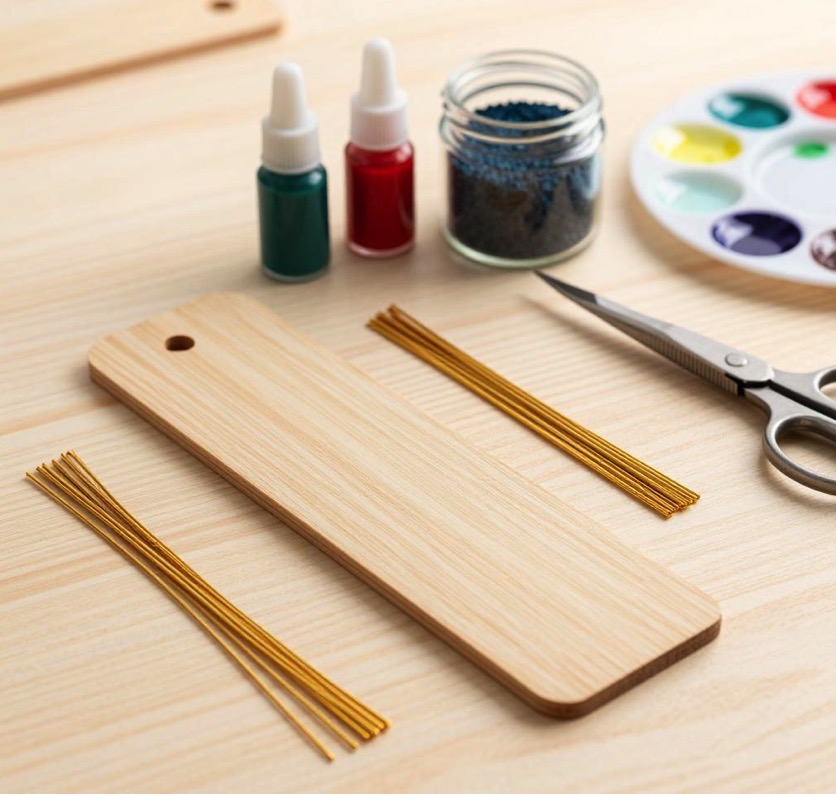
Lightly sketch the pattern outline on the base with a pencil. Beginners are advised to start with simple patterns such as flower petals, leaves, or cloud patterns. Bookmarks are small (usually 2-3cm wide and 10-15cm long), so the design shouldn’t be too complicated.
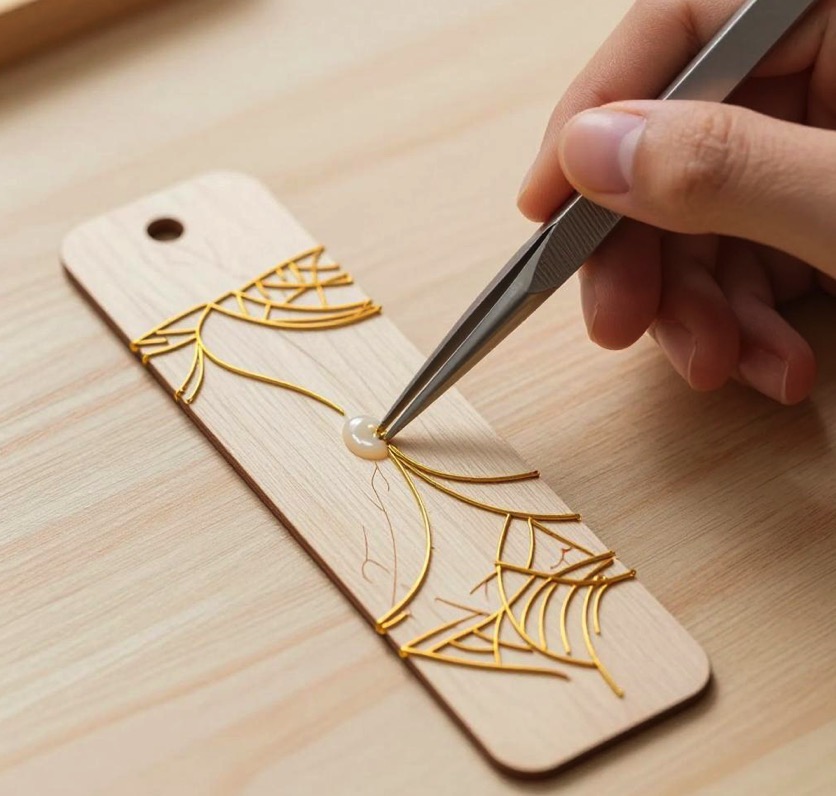
This is the step that requires the most patience.
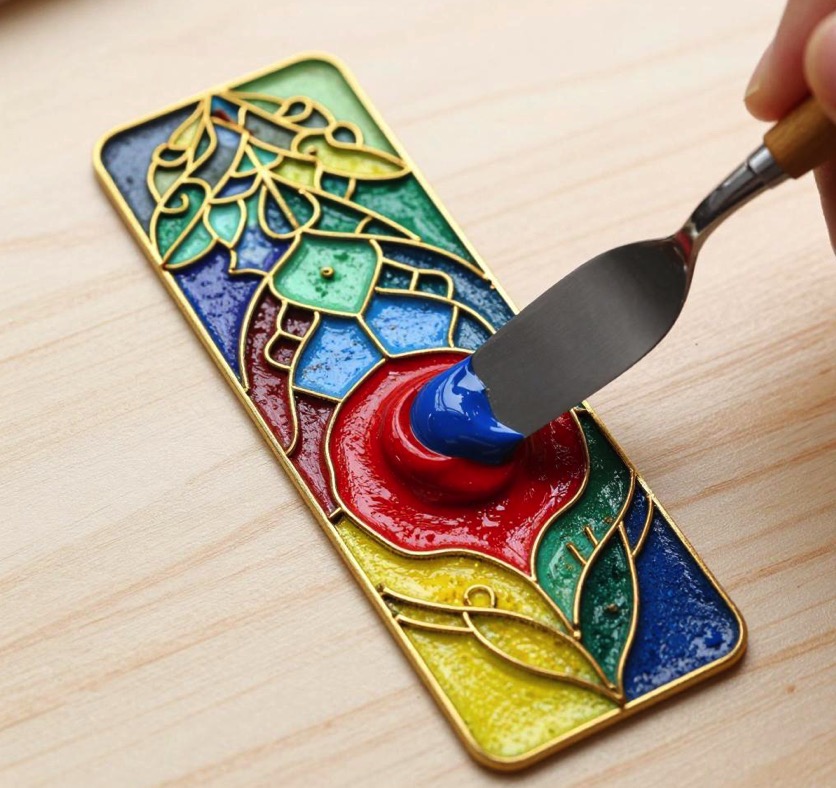
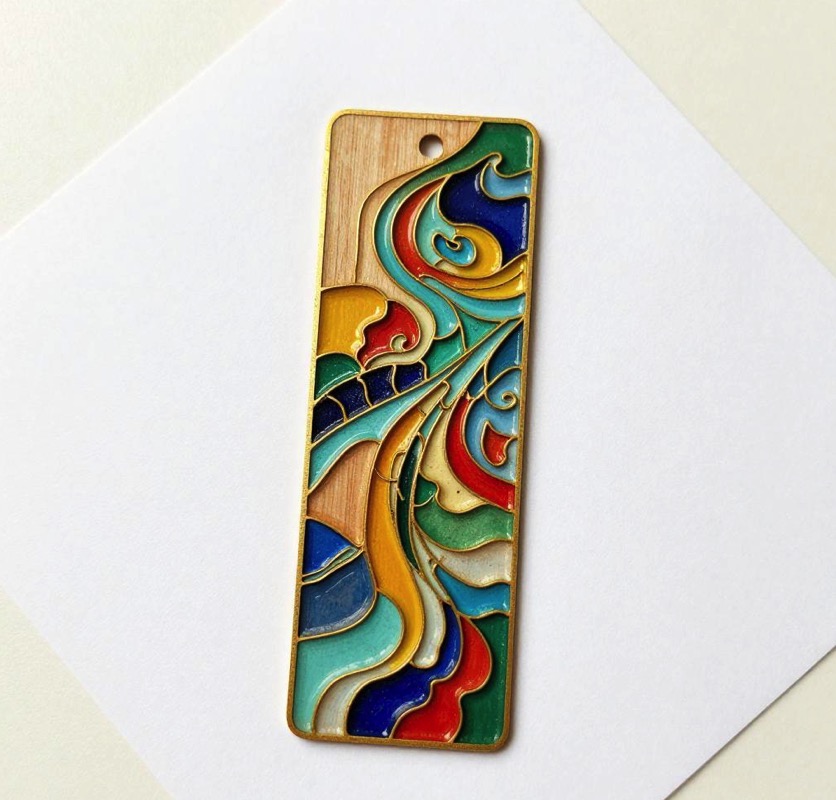
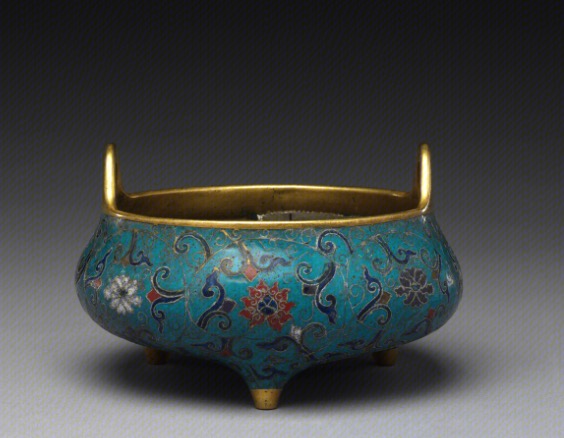
1. Kangxi Mark Cloisonné Enamel Censer with Interlocking Lotus Design
This censer is a representative cloisonné piece from the Kangxi period of the Qing Dynasty. The body is round, with two upright handles and three animal-leg feet, a form derived from ancient bronze ritual vessels.
The censer features a light blue enamel background adorned with interlocking lotus patterns—full blossoms with spreading leaves. The interlocking lotus motif is one of the most common decorative themes in cloisonné, symbolizing continuity and unending vitality. The base bears the inscription “Kangxi Nian Zhi” (Made in the Kangxi Era), marking it as a typical example of Qing imperial cloisonné.
Characteristics: Archaistic form, imperial inscription, classic interlocking lotus design.
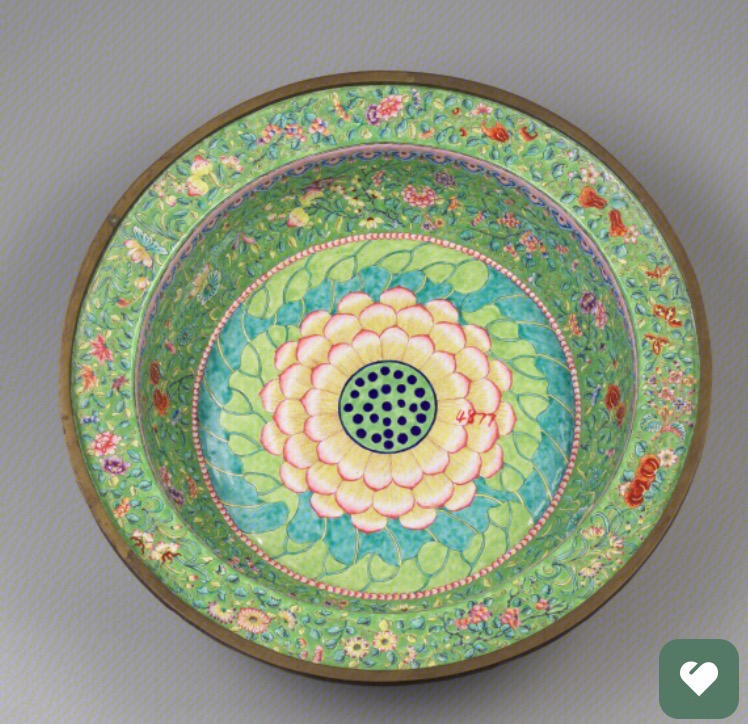
2. Painted Enamel Basin with Lotus Design
This piece represents the painted enamel technique. Unlike cloisonné, which uses metal wires to outline patterns, painted enamel applies enamel directly onto the surface to create images.
The center of the basin depicts a lotus painting—lotus flowers in full bloom with spreading leaves, rendered in elegant and delicate colors that evoke the charm of ink wash painting. Painted enamel technique was introduced from the West during the Qing Dynasty and, through the integration and innovation of imperial craftsmen, developed a distinctive Chinese style. This lotus basin stands as a testament to the fusion of Chinese and Western craftsmanship.
Characteristics: Painted enamel technique, lotus motif, ink painting style.
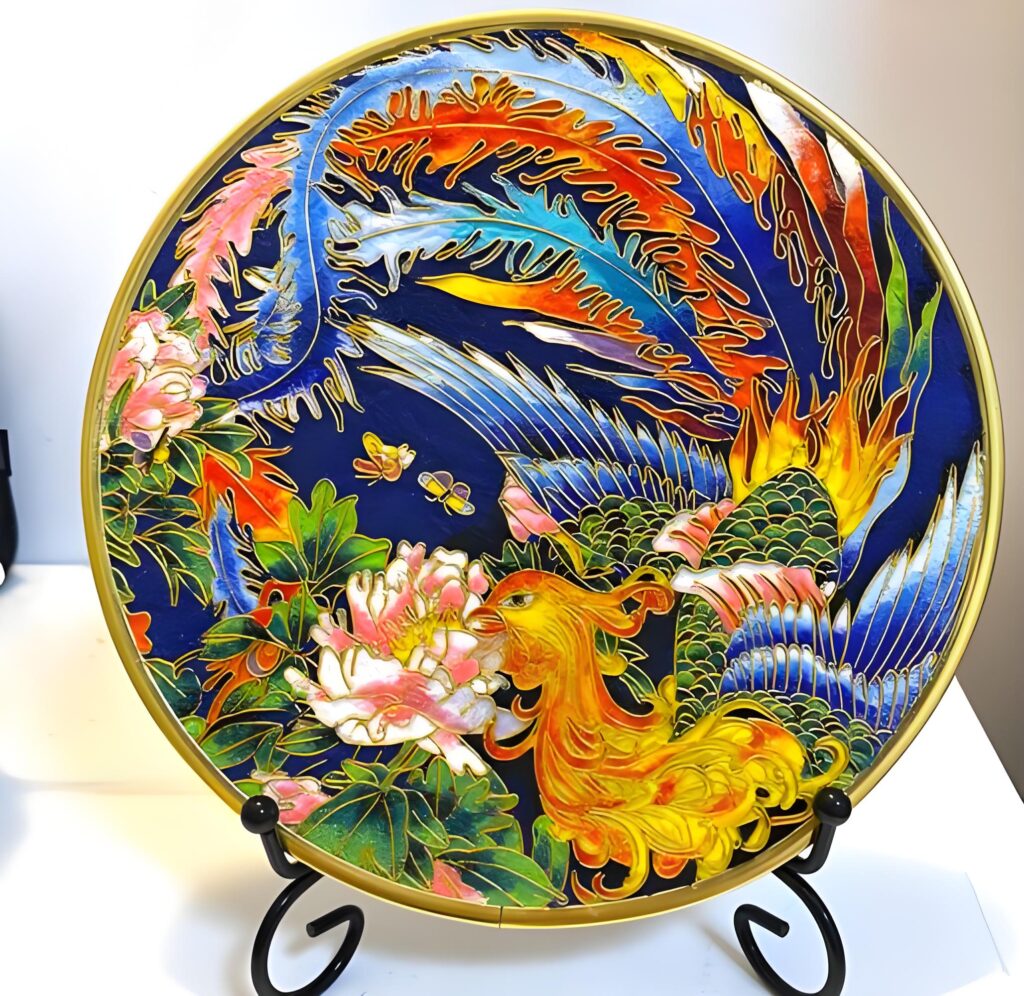
3. Cloisonné Enamel Painting of a Phoenix
This piece takes the phoenix as its theme, representing an attempt to combine cloisonné with painted enamel techniques.
The phoenix spreads its wings, its tail feathers long and graceful. Metal wires outline the layered feathers, which are then filled with colored enamels. The interplay of reds, yellows, blues, and greens creates a rich and vibrant palette. The phoenix, an auspicious bird, is a common decorative motif in traditional Chinese crafts. Unlike the more frequently seen interlocking lotus patterns, this piece features an auspicious bird theme, giving it a livelier and more dynamic quality.
Characteristics: Phoenix motif, rich colors, combination of cloisonné and painted enamel.