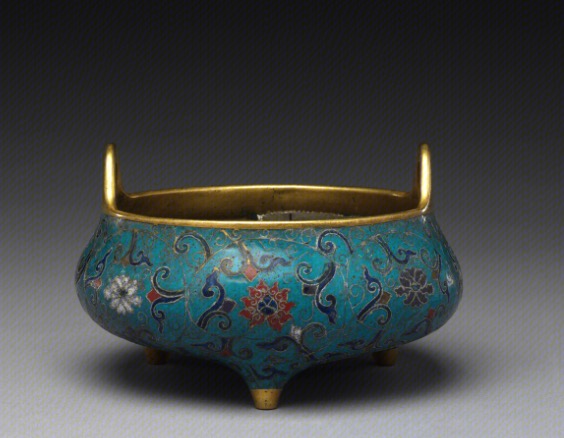
1. Kangxi Mark Cloisonné Enamel Censer with Interlocking Lotus Design
This censer is a representative cloisonné piece from the Kangxi period of the Qing Dynasty. The body is round, with two upright handles and three animal-leg feet, a form derived from ancient bronze ritual vessels.
The censer features a light blue enamel background adorned with interlocking lotus patterns—full blossoms with spreading leaves. The interlocking lotus motif is one of the most common decorative themes in cloisonné, symbolizing continuity and unending vitality. The base bears the inscription “Kangxi Nian Zhi” (Made in the Kangxi Era), marking it as a typical example of Qing imperial cloisonné.
Characteristics: Archaistic form, imperial inscription, classic interlocking lotus design.
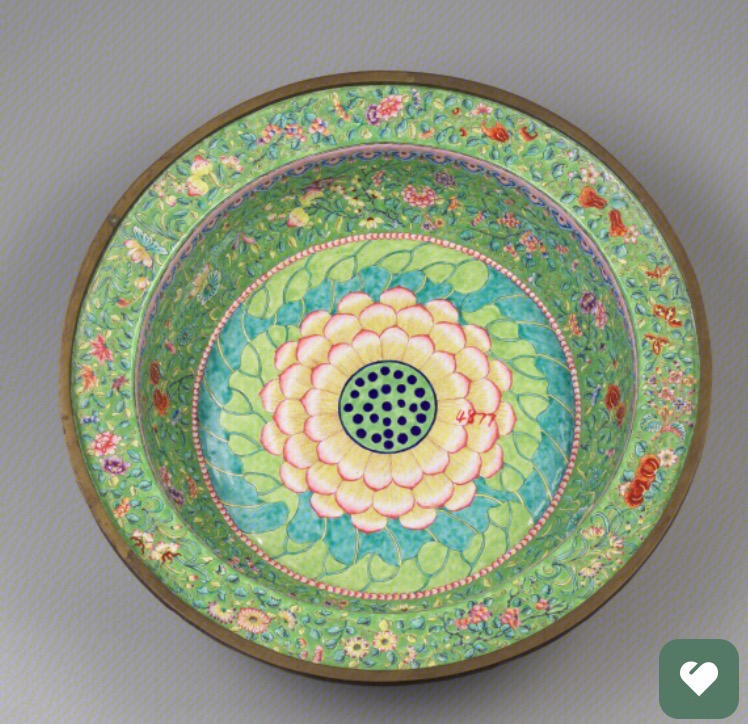
2. Painted Enamel Basin with Lotus Design
This piece represents the painted enamel technique. Unlike cloisonné, which uses metal wires to outline patterns, painted enamel applies enamel directly onto the surface to create images.
The center of the basin depicts a lotus painting—lotus flowers in full bloom with spreading leaves, rendered in elegant and delicate colors that evoke the charm of ink wash painting. Painted enamel technique was introduced from the West during the Qing Dynasty and, through the integration and innovation of imperial craftsmen, developed a distinctive Chinese style. This lotus basin stands as a testament to the fusion of Chinese and Western craftsmanship.
Characteristics: Painted enamel technique, lotus motif, ink painting style.
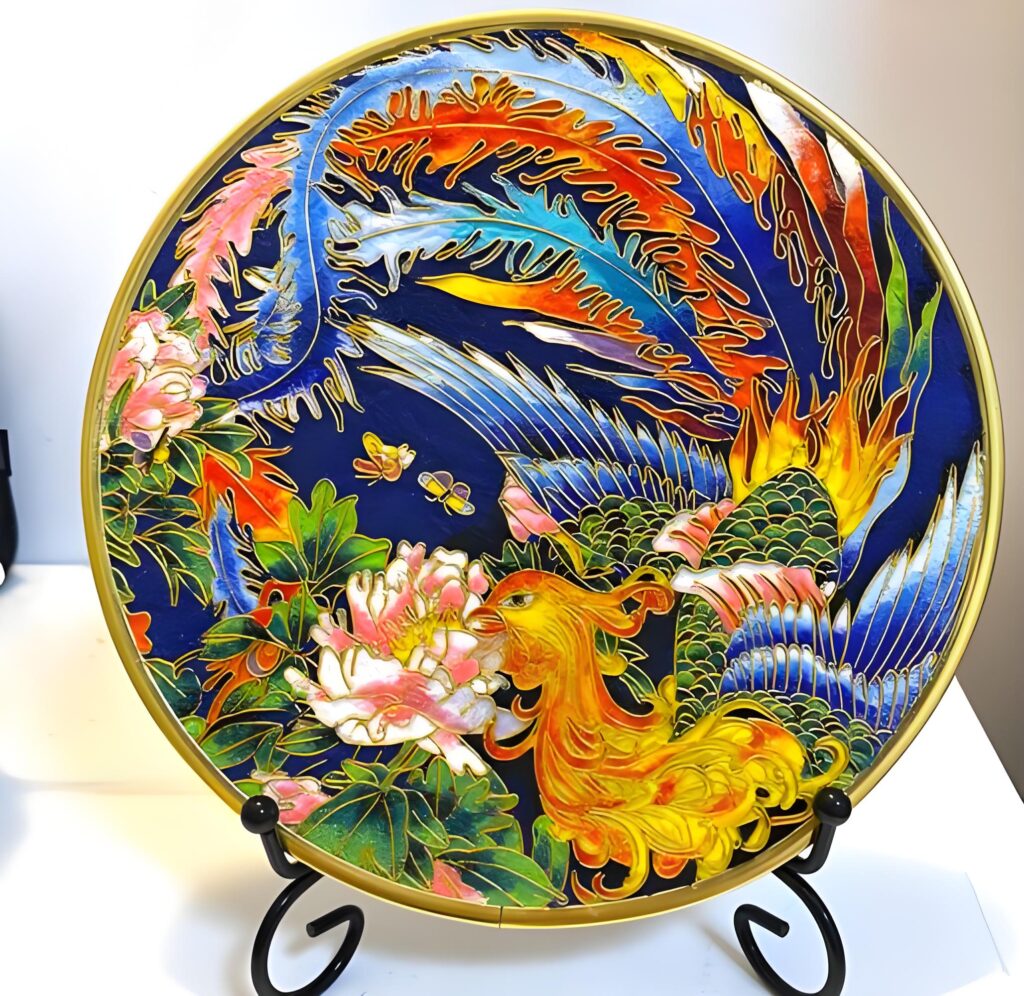
3. Cloisonné Enamel Painting of a Phoenix
This piece takes the phoenix as its theme, representing an attempt to combine cloisonné with painted enamel techniques.
The phoenix spreads its wings, its tail feathers long and graceful. Metal wires outline the layered feathers, which are then filled with colored enamels. The interplay of reds, yellows, blues, and greens creates a rich and vibrant palette. The phoenix, an auspicious bird, is a common decorative motif in traditional Chinese crafts. Unlike the more frequently seen interlocking lotus patterns, this piece features an auspicious bird theme, giving it a livelier and more dynamic quality.
Characteristics: Phoenix motif, rich colors, combination of cloisonné and painted enamel.
Leave a Reply